Industry
Applicant Tracking Important to HR


A new report found that applicant tracking is an important part of any HR staffers duties, among other things.
The Bernard Hodes Group recently released the HR Department Structure and Staffing Trends Report, which provides an overview of HR staffing for 2008. According to an article by HR.BLR.com, the report focuses on how HR professionals use their time and get things done.
The report found that for employers with less than 1,000 employees, the HR department had an average of five HR employees, with three in recruiting. Companies with more than 1,000 employees had an average of 29 HR staff members, with 12 in recruiting.
Respondents stated that job responsibilities they spent the most time on included: administrative work at 77 percent, interviewing at 69 percent, consulting with hiring managers at 66 percent, reviewing resumes at 64 percent, managing the candidate relationship at 49 percent, handling internal employees and candidates or transfers at 38 percent, mining an internal applicant tracking system at 36 percent and mining external databases or the Internet at 34 percent.
When it comes to applicant tracking systems, 89 percent of respondents said mining for job applicants is handled internally, while about 49 percent have someone dedicated to the employee referral program from the recruiting function, whether in HR or another department.
The report further found that seven in 10 organizations, or 73 percent, use contingency firms, while 72 percent use local temporary services to help meet recruiting needs. Also, hard-to-fill jobs and management or executive level positions are most likely to be filled by outside vendors, according to 73 percent of respondents. Only 16 percent of respondents said they use external suppliers for all levels of recruitment, while 12 percent use them for high-volume positions.
The report also notes that hard-to-fill jobs and management and executive-level jobs (73%) are most likely to be filled by outside vendors. Only 16% of respondents use external suppliers for all levels, and 12% use them for high-volume positions.
Years of candidate history is the main reason firms stay on software they’ve stopped liking. Here’s a practical guide to moving safely: what to export first, what doesn’t come across on its own, and the questions to ask before you switch.
Read more
“Your data is yours” is easy to say. Here’s how it works at PCRM: a private single-tenant database, an independent SOC 2 examination, a clear line on AI training, and plain answers on what happens if you leave.
Read more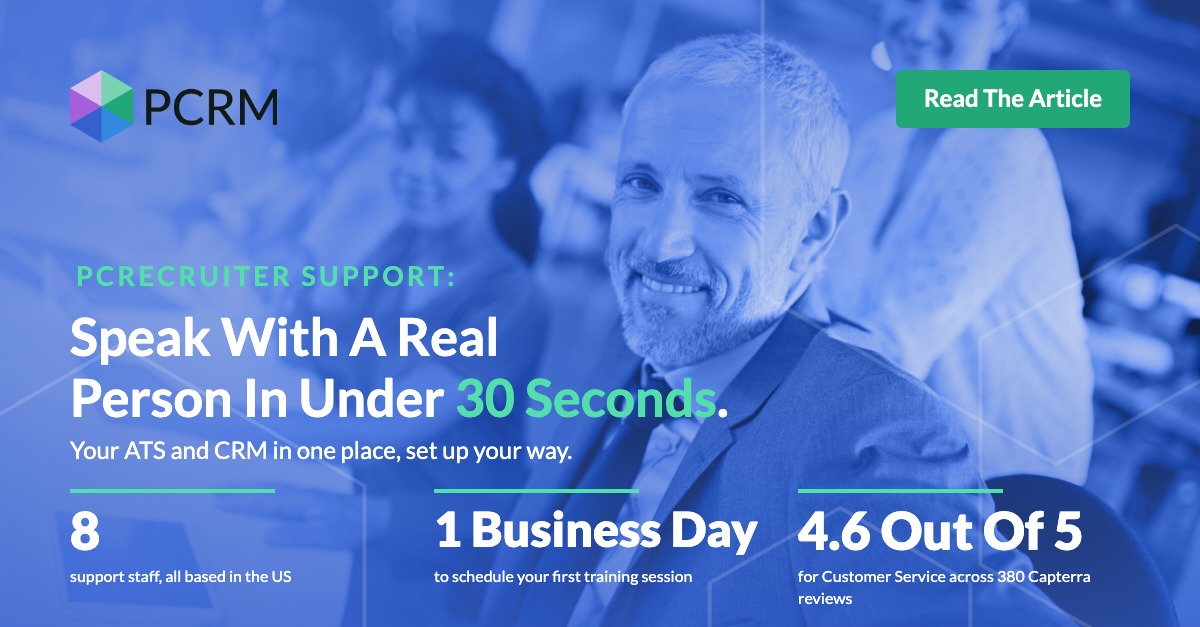
A candidate is hours from accepting a counter offer and your system won’t cooperate. What does waiting in a ticket queue cost a boutique recruiting firm, and why does support response time so rarely make the software shortlist? Here are PCRecruiter’s support numbers, plus four checks you can run on any vendor before you sign.
Read moreWhether you're just getting started or an industry vet, we'd like to help.