Industry
Applicant Tracking Systems and Resumes
Formatting your resume for an applicant tracking system may be an easy way to get noticed.


Formatting your resume for an applicant tracking system may be an easy way to get noticed.
If you’re applying for job after job you think you’re qualified for and getting no response, you might be able to change your luck with some simple tweaking of your resume.
In today’s hiring world, most companies send resumes through applicant tracking systems before they ever reach a human. While it might not be very beneficial to job seekers, an ATS helps the company to create efficiencies in the hiring process.
According to an article by Examiner, an ATS is a software application designed for recruitment tracking purposes and to manage resume data. An ATS collects job-seeker information from data fields submitted on the company Web site, from applicants who apply on job boards or data retrieved by manually scanning resumes.
The ATS is programmed to sort through all the data that is submitted and identify keywords and phrases that match certain skill sets, years of experience, levels of expertise, industry experience, technical skills and other words and phrases.
In essence, the ATS finds the most qualified candidates for the position and submits those resumes to the HR department for consideration. While not a perfect system, ATS are generally cost-effective and can increase the odds of finding good candidates.
That means if you resume or online application doesn’t include the keywords or phrases the ATS is looking for, it will most likely be looked over and not even considered for the position. However, you can format your resume to be more ATS-friendly by including keywords and phrases found in the job description. You also can use a professional resume writer or job-seeking consultant.
Years of candidate history is the main reason firms stay on software they’ve stopped liking. Here’s a practical guide to moving safely: what to export first, what doesn’t come across on its own, and the questions to ask before you switch.
Read more
“Your data is yours” is easy to say. Here’s how it works at PCRM: a private single-tenant database, an independent SOC 2 examination, a clear line on AI training, and plain answers on what happens if you leave.
Read more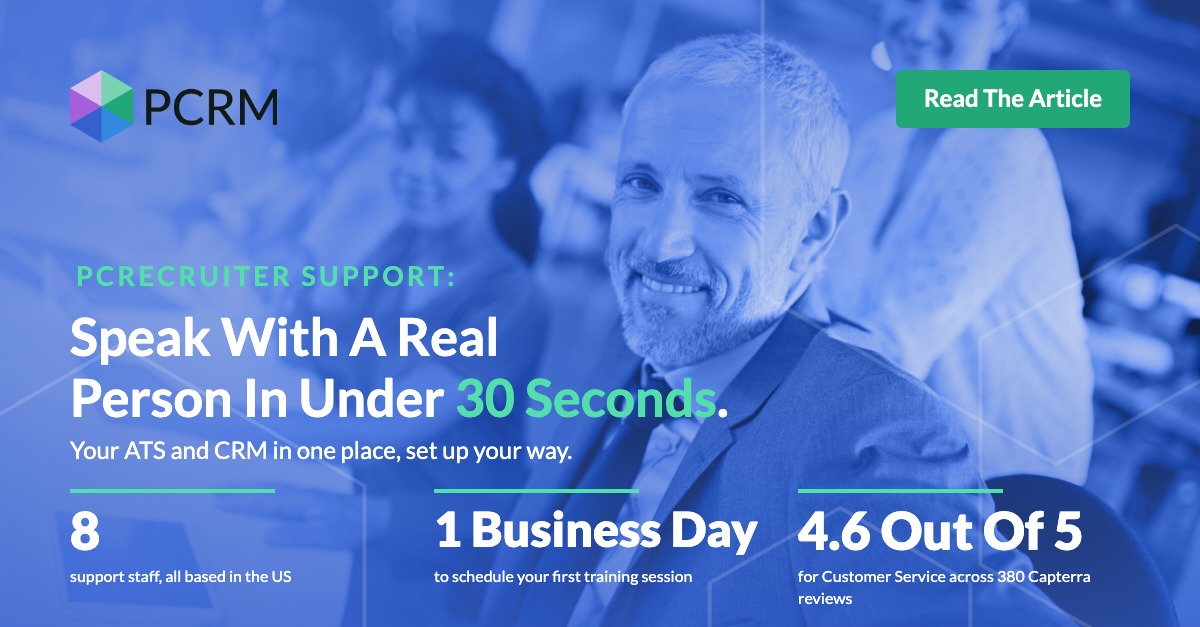
A candidate is hours from accepting a counter offer and your system won’t cooperate. What does waiting in a ticket queue cost a boutique recruiting firm, and why does support response time so rarely make the software shortlist? Here are PCRecruiter’s support numbers, plus four checks you can run on any vendor before you sign.
Read moreWhether you're just getting started or an industry vet, we'd like to help.